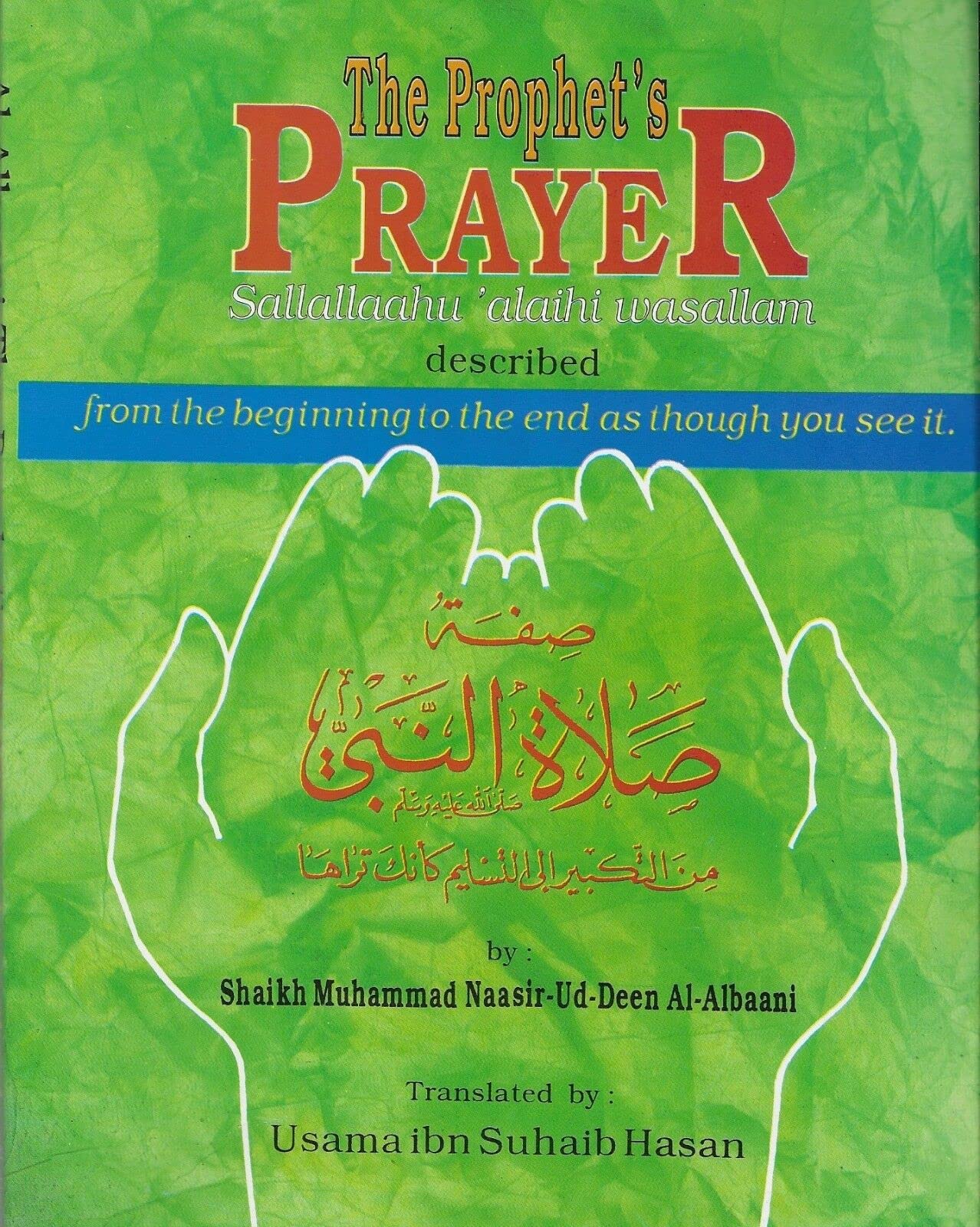
The Prophet's prayer discribed
The Prophet's prayer discribed
Couldn't load pickup availability
The Prophet's Prayer Described" (originally titled Sifat Salat al-Nabi in Arabic) by the renowned 20th-century Hadith scholar Shaykh Muhammad Nasiruddin al-Albani is one of the most influential and widely read Islamic textbooks on the mechanics of daily worship (Salah).
Here is a comprehensive breakdown and description of the book, its methodology, and why it holds such a vital place in Islamic literature.
Overview and Core Mission
The fundamental objective of the book is built directly upon the famous command of the Prophet Muhammad ﷺ:
"Pray as you have seen me praying." (Sahih al-Bukhari)
Shaykh al-Albani noticed that over centuries, many Muslims had begun practicing prayer based strictly on the later interpretations or local traditions of specific legal schools (madhahib), sometimes missing authentic practices or holding onto unverified ones. He wrote this book to bypass later structural biases and reconstruct the Prophet’s exact prayer method—from the initial opening Takbeer to the final Tasleem—solely using the rigorous standards of Hadith science.
Key Characteristics & Methodology
- Evidence-Based (Hadith-Centric): Every single posture, statement, and supplication mentioned in the book is explicitly tied to an authentic (Sahih) or good (Hasan) narration.
- Chronological Structure: The book is written as a step-by-step walkthrough. It physically guides the reader through the sequence of prayer, explaining exactly what to do with your hands, eyes, back, and feet, as well as what to recite at each stage.
- Freedom from School Bias: Rather than adhering blindly to the Hanafi, Maliki, Shafi'i, or Hanbali school, al-Albani selects the view most strongly supported by the authentic texts.
- Clarity on Rulings: He clearly categorizes different aspects of the prayer into:
- Shuroot (Prerequisites like ablution/Wudu)
- Arkan (Pillars without which the prayer is invalid, like bowing or prostrating)
- Wajibaat (Obligations)
- Sunan (Recommended Prophetic traditions that maximize reward)
rd)
What the Book Covers (Step-by-Step)
The manual painstakingly dissects every phase of the prayer, providing deep clarity on parts that often confuse worshippers:
- Facing the Ka'bah & The Intention (Niyyah): Clarifying that the intention is hidden in the heart, not spoken aloud.
- Standing (Qiyam) & The Sutrah: The rules of using a barrier in front of you while praying.
- Opening the Prayer: The placement of hands during the Takbeer and positioning them on the chest.
- Recitation: Detailed variations of the opening supplications (Du'a al-Istiftah), the necessity of Al-Fatihah, and the etiquettes of saying "Ameen" out loud or silently.
- Bowing (Ruku') and Rising: Perfecting the straight-backed posture and what to recite.
- Prostration (Sujud): The "seven bones" rule of touching the ground and the prohibition of mimicking an animal’s posture (like resting forearms flat like a dog).
- The Sitting & Tashahhud: The exact finger movements during the testimony of faith and the specific wordings taught by the Prophet ﷺ.
Why It Is Highly Recommended
For a beginner, it serves as an absolute, illustrated cheat sheet to getting your prayer right from day one. For veteran Muslims, it offers an eye-opening opportunity to auditing their daily habit, correcting minor postures or recitations that may have drifted away from the authentic Sunnah over the years.
(Note: The book is widely available in both its massive, deeply academic original format with extensive legal footnotes, as well as a highly popular abridged version called "Mukhtasar Sifat Salat al-Nabi" which is simplified for everyday reading).
Share